Thursday, 7 April 2011

Does there have to be a title?

Another glorious spring day yesterday and the same again today. I see in the paper that this weather is supposed to continue over the weekend as well. It was very pleasant over the Downs yesterday afternoon when I took Fern for a walk and afterwards I spent a little while in the garden. Sowed the first row of peas and planted garlic. I'm not sure if this garlic is the sort that should be planted in autumn or spring, but some of the cloves had started sprouting so I'm hopeful that this year we shall get a crop - unlike last year when it all rotted.

Last night I was out for the fourth time in five evenings, this time a Lions dinner meeting. There was a magnificent sunset but from outside the hotel in Rottingdean where the meeting was held, the sun was behind the cliffs. The jetty just visible is part of Brighton marina.

Wednesday, 6 April 2011

What's the alternative?

Four weeks from tomorrow I will have the opportunity to vote - twice. There are to be local elections, ie elections to our local council, and there is also to be a referendum. Although I have yet to receive detailed information about this, my understanding is that, in broad terms, we are being asked if the system of electing our Members of Parliament should be changed from the present, long-established idea that the candidate with the most votes wins (known as "first past the post") to a system whereby votes for losing candidates are redistributed ("alternative voting") and the winning candidate is the one who is first to obtain 50% of the votes cast. There have been complaints that many winning candidates have received less than 50% of the votes and are not the choice of the majority of the electorate. I'm not convinced that alternative voting, as I understand the proposed system, will actually eliminate. Let's just look quickly at the mechanics of both systems, starting with the current "first past the post" method.

This is, of course, the commonest method of voting across the entire world. Voters are presented with a list of candidates and have to mark the one for whom they wish to vote, usually by drawing a cross in a square beside the candidate's name. The candidate for whom the most votes are cast wins the election. Simple and straightforward and the result can be announced in the time it takes to count the votes.

Under alternative voting, voters are again presented with a list of candidates. However, instead of selecting just one, they are asked to rank the candidates in order of preference, from 1 to however many. Should there be one candidate who has collected more than 50% of first preferences, that candidate is declared the winner. But if no candidate has collected 50% of the votes, there is a second round. This time, the candidate with the fewest votes is left out and the second choices of those who voted for that candidate are distributed amongst the others. This is repeated until there is a candidate with more than 50%. Apparently, this is the system in use in Fiji, Papua New Guinea and Australia. In Fiji there are demands to change back to "first past the post" and in Australia people are required by law to cast their votes.

Of course, I accept that the fact that this system is not in wide use does not necessarily mean it should not be introduced. But is it any better than the system we have now? I think not. The complaint that winning candidates under the present system may be not wanted by the majority of voters could still be valid and, what seems worse to me, the winner will not be (as at present) the most popular candidate but will be the least unpopular.

It may be that my understanding of the possible new system is inaccurate - but I doubt it. That being so, I shall definitely be voting "no".

Tuesday, 5 April 2011

More matters Lionistic

Again, I feel I should start with a short explanation. Lions Clubs across the world are organised into Districts which are subdivided into Zones of about seven clubs each.

The Zone in which Brighton Lions Club, the club to which I belong, finds itself consists of six Lions Clubs spread along the coast of Sussex between the Rivers Adur and Cuckmere, plus one Lioness Club. We are fortunate in having a particularly good inter-club relationship. This is, in part, due to what has now become an established tradition of an annual Zone Olympics. These Olympics involve each club organising a social event based on a vaguely sporting competition. This year, for example, the Clubs have played or will play against each other in events comprising toad in the hole (explanation here), shuffleboard, ten-pin bowling, kurling (the indoor version of curling), darts, pool, shove ha'penny, a quiz and skittles.

Under the leadership of a Zone Chairman, the presidents and secretaries of each club, plus any other Lions sufficiently interested to attend, meet several times during the year. A few years ago the Zone Chairman was a particularly well-liked and respected man, a man whome many were delighted to call a friend. Despite having been diagnosed as suffering from cancer, John always seemed more concerned with the well-being of other people than with his own health problems. He had asked me to act as his Zone Secretary and although I was at that time trying to reduce the number of jobs I undertook with the Lions, there was no way I could dream of refusing John.

John always ended zone meetings with a joke, usually a feeble joke. John was renowned for his feeble jokes. After his death just about at the end of his year as Zone Chairman, the new ZC introduced the John Wilkinson Memorial Joke as the last item on the agenda of every zone meeting. Subsequent ZCs have continued that practice. The joke selected for last week's meeting struck us all as very funny, which is why I am reproducing it here. It is a little risqué so I will apologise in advance if I offend anyone.

A man walked into a pub, sat at the bar and placed a bag on the bar. The barman asked what was in the bag. Without speaking, the man reached into the bag and took out a miniature man, almost exactly a foot tall, whom he placed on the bar. He reached into the bag again and took out a miniature piano which he also placed on the bar. Reaching into the bag a third time, he pulled out a miniature piano stool. The miniature man sat on the stool and started to play the piano.

‘Good heavens,' exclaimed the barman. ‘Where did you get those?'

The man still said nothing but reached yet again into the bag. This time he pulled out a magic lamp. Handing this to the barman he said, ‘Rub it'. The barman did so and a genie appeared.

‘You may have one wish,' the genie said to the barman. ‘Everybody is entitled to one wish.'

‘I wish for a million bucks,' said the barman.

At that, the door opened and ducks started filing into the pub. Soon the place was filled with them - on the bar, the chairs, the tables - and still they kept coming.

‘I think your genie must be a bit deaf,' said the barman. ‘I wished for a million bucks, not a million ducks.'

The man spoke for the first time. ‘Tell me about it,' he said. ‘Do you think I really asked for a 12-inch pianist?'


So yesterday I cut the grass for the first time this year and - more importantly - pulled the first rhubarb. This plant has been covered by a metal wastepaper basket all winter and is miles ahead of the others. One plum tree is a mass of blossom but the other has very little this year.

Monday, 4 April 2011

Matters Lionistic

For those not in the know, perhaps I should explain that "Lionistic" is a word used as an adjective to describe matters relating to the International Association of Lions Clubs and is not intended as a synonym for "leonine" although, for all I know, it might well be. Anyway, to matters Lionistic.

Way back before anybody had coined the phrase "social networking", possibly as long ago as 11 or 12 years, I stumbled across a site that was a forerunner of Facebook and Twitter. It was a message board run by a Californian Lion. I haven't the foggiest idea how I found it, but I quickly became addicted, along with a good number of other Lions around the world. We used it as a discussion forum for serious matters to do with Lions Clubs, as a means of exchanging ideas and as a place to indulge in idle banter.

In the fullness of time, the organiser (the name "Lane" rings a bell but whether this was a surname or forename I can no longer remember) decided to change the format of the message board quite dramatically. The result was far less user-friendly and led to another Lion, Milt from Los Angeles, setting up a new board to which nearly all the regulars migrated. After a while, Milt became somewhat disillusioned with the volume of banter (I think he was probably paying for the amount of use the board received) and decreed that only serious matters should be discussed. So yet again we migrated, this time to a board established by an English Lion, Paul from Birmingham. He, too, eventually decided he was no longer interested and closed "the Coffee Shop". I considered that there were benefits arising from the use of a message board of this type, one of which was the making of new friendships. As an example, this is how I first "met" Uncle Skip whom I am now pleased to call my friend and whom, along with the charming Grandma Skip, I have subsequently met face-to-face on a couple of occasions. After some trial and error, I eventually set up the most recent Lions' message board so that folks could meet Under the Pier, as I called it. However, I think the time is fast approaching for us to abandon ship. The tide is rising Under the Pier and we have been largely submerged by the dreaded F/B. The volume of messages posted Under the Pier has dwindled, as has the number of people who even just drop by. I really think the board has outlived its usefulness and before too much longer I will close it down.

Sunday, 3 April 2011

Gerard Hoffnung

I'm feeling lazy today so not a lot of writing.

Gerard Hoffnung died in 1959 at the age of 34. Born in Berlin of Jewish parents, he came to London as a refugee in 1939. He became a professional cartoonist and played the tuba but what he is primarily remembered for is his brilliance as a raconteur. In 1958 he took part in a debate at the Oxford Union and his speech was broadcast by the BBC. Here is the best-known part of it - the bricklayer's story. I hope you enjoy it as much as I do every time I hear it.

Saturday, 2 April 2011

Scenic Saturday - Humberside

Number 35 in the series.


Back on the east coast again, we come to Humberside. Another one of the "new" counties, this was created from part of north Lincolnshire and a large chunk of what was the East Riding of Yorkshire. Humberside sits astride the estuary of the River Humber.

Spurn Head (sometimes called Spurn Point) is a sand spit on the northern side of the estuary. Subject to constant erosion, the neck spit is likely to be breached fairly soon. When that happens, the whole spit will be washed away and a new spit will start to form. This happens about every 250 years.

Further north, the town of Bridlington was once a popular seaside resort. It still attracts visitors but in much smaller numbers now that travel to warmer places like Spain is so easy and comparatively cheap.

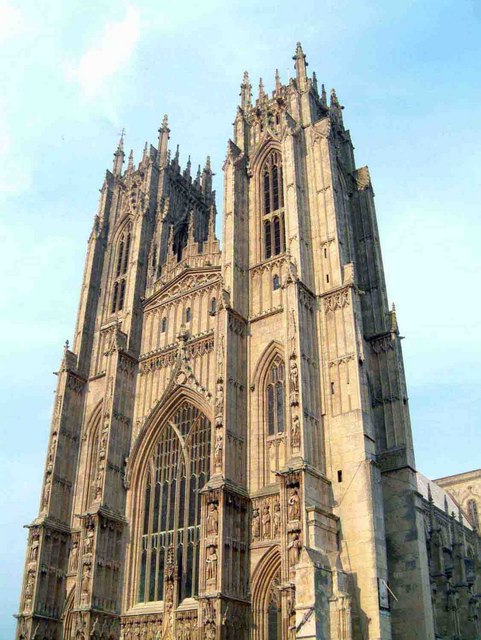
Possibly the most attractive town in the area is Beverley, where the minster church is sometimes described as the finest Gothic building in Europe. Graham Hermon's picture shows the west front.

Friday, 1 April 2011

Goodbye to spring?

The weather this week has turned cold and, at times, wet with a stiffish breeze. Am I dreaming or was I really basking in the warmth of the sun last week?

I smiled when I read the other day about the American serviceman returning home after having been stationed in England during the War. He was asked what would be his most enduring memory of England and replied, ‘The way spring merges imperceptibly into autumn'. I related this tale to a fellow dog-walker who told me of a comment made by a Japanese student she once had staying with her. ‘In our country,' said the student, ‘we have seasons and we have different clothes for each season. In England you can wear the same clothes all year round'.

Of course, we don't have such a thing as a climate here in England, we have weather. Whether it's raining or whether it's not doing so yet.

Hosting foreign students is a local cottage industry. Brighton has several language schools drawing students from just about every country in the world to learn English. The schools like to have their students staying with English families and are always looking for more host families. It can be quite a profitable business for housewives looking to earn some extra tax-free cash.


#1Nana was saying how she has recently found it difficult to get any words onto paper. Actually, she didn't really say ‘paper', she said ‘written down'. I well remember how, when I was writing the story of Les Lavandes I reached the stage of thinking I had writer's block. I managed to overcome that by setting myself a small target. Each day I aimed to write just a couple of paragraphs. This took my mind off the seemingly unattainable object of finishing what eventually became a slim paperback. (It's all over on my other blog if anybody is interested.) I seem to have to opposite situation arise this week and words have flowed in a torrent - except for where I wanted them to flow most strongly. Somehow I haven't managed to raise much enthusiasm for cracking on with writing my family history. I have, however, written about how I bought a flame-thrower while in France last week. That story will be appearing on Les Lavandes in a day or two. In fact, I managed to write so much that it will probably appear over several days as a sort of serial story.


Maybe spring is still here. For the last couple of days a hen blackbird has been busy gathering nesting materials. When she has a beakful, she flies onto a stubby branch of a heavily pollarded cherry tree in the garden, looks around carefully and then flies onto a fence post. After another careful check, she flies into our neighbour's fir tree where she is planning to nest.